© 2026 Saad Web Designer | All Rights Reserved


Brooklyn, NYC
How Website Redesign Improves SEO and Conversions
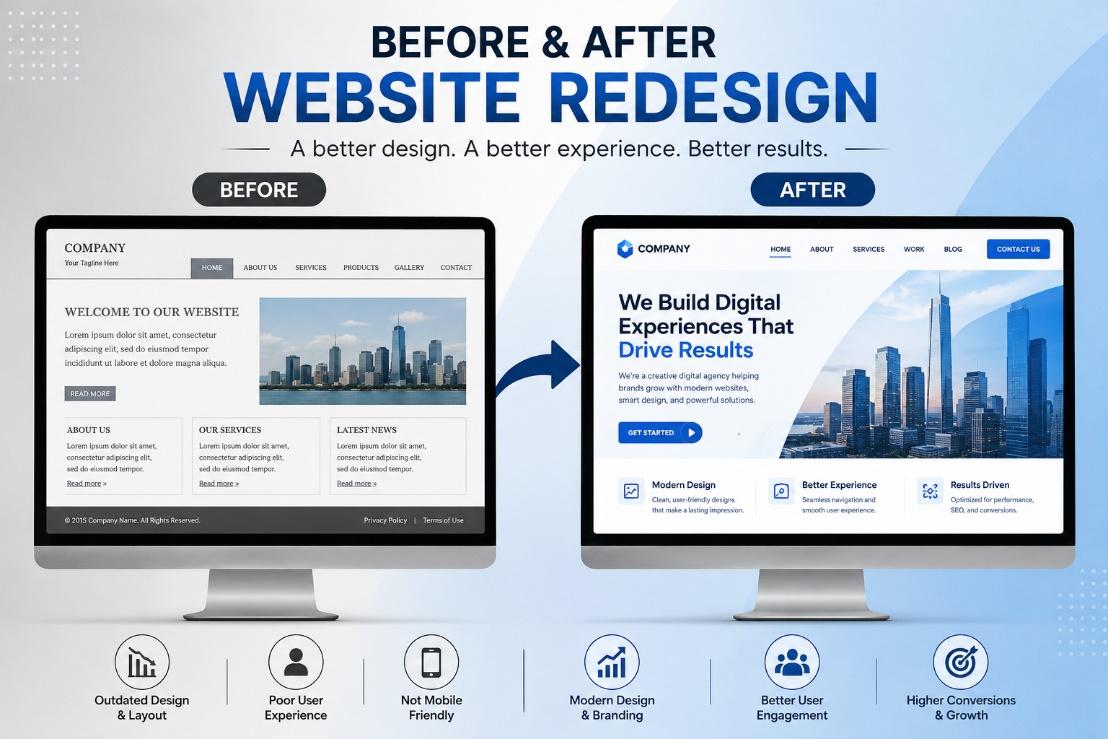
Website redesign improves SEO and conversions by fixing technical performance, optimizing the website for mobile usability, and smoothing website structures. It helps search engines to crawl web pages efficiently and guides users to take the desired action, easily transforming leads into sales. If a website is outdated, the best thing to do when redesigning it is to focus on search visibility and user behaviour. If your website is outdated, loads slowly, has confusing navigation, is not usable on mobile devices, and generates traffic with fewer enquiries, you must invest in strategic and Professional Website Redesign Services.
What is a website redesign
A website redesign is a process that involves improving visual design, structure, content, functionality, user experience, and often the technology used to create the current website. It can go from a focused visual redesign to a complete rebuild. You can expect the following elements to be involved in a redesign process:
● Updating the website's visual identity and layout
● Improving navigation and information architecture
● Reorganising pages and content
● Rewriting or restructuring important copy
● Improving mobile responsiveness
● Optimising images and page performance
● Improving calls to action and enquiry forms
● Fixing technical SEO issues
● Improving accessibility and usability
● Updating outdated functionality
● Creating clearer service or product pages
● Preserving valuable existing URLs and search visibility
Redesign is not about making your website more decorative and visually appealing, but it is done to solve measurable problems.
For example: there is a service page on a website that gains target traffic but receives few enquiries. Only changing the colour scheme won’t solve the issue. You have to check the page's search intent, messaging, content structure, trust signals, CTA placement, form experience, mobile layout, and overall user journey, and improve the design accordingly.
How SEO is improved through a website redesign
A redesign can create strong SEO foundations as the website becomes easy for the search engines to crawl, understand, and evaluate the content. It doesn’t mean that you will get higher rankings. Google states that no single page-experience signal ensures ranking success because it also includes relevance, content quality, and overall search experience.
A redesign can trigger the following SEO-focused Redesign Services:
It can provide a better website structure
Outdated websites can have service pages without a clear organisation. Users are unable to find the relevant information because they are hidden in several pages. Apart from that, similar pages can overlap or compete with each other. When you redesign the website, a better structure can be crafted that is understandable for the users. For example, if there is a service website currently consisting of pages that range from the home page, service, more services, to contact can be arranged like:
● Home
● Web design
● E-commerce design
● Portfolio
● About
● Contact
This organised structure can help visitors to navigate without any confusion and make the site understandable for crawlers. Apart from that, a redesign can improve:
● Internal linking
● Navigation menus
● Breadcrumbs
● URL structure
● Page hierarchy
● Service categorisation
● Content relationships
Improves mobile experience
Google uses the mobile version of the site’s content for indexing and ranking through mobile-first indexing. Google prioritises responsive design for mobile-first ranking. A Responsive Web Design Guide can help you understand how mobile-friendly design can enhance user experience. This is the reason why businesses in NYC consider mobile responsiveness. A mobile-friendly website may not work properly on larger screens. Visitors can face the following challenges:
● Tiny text
● Buttons that are difficult to tap
● Horizontal scrolling
● Slow-loading images
● Crowded navigation
● Forms that are frustrating to complete
● Important information pushed too far down the page
To avoid this issue, make sure the design is crafted to be responsive so that it works effectively on every device type, regardless of screen size, instead of simply shrinking the desktop design for mobile devices.
Better page speed and Core Web Vitals
Website performance has a direct impact on usability and overall page experience. The Core Web Vitals provided by Google measure loading performance, responsiveness, and visual stability. Google recommends aiming for an LCP of 2.5 seconds or less, INP below 200 milliseconds, and CLS below 0.1 for a good user experience. A redesign can identify performance problems through the following practices:
● Compressing and properly sizing images
● Removing unnecessary scripts
● Reducing excessive animations
● Improving caching
● Optimising fonts
● Cleaning up inefficient code
● Improving hosting or server configuration where appropriate
● Loading resources more efficiently
The main objective is not to run for perfect performance, but rather to make the website fast and responsive for actual users.
Useful and search-focused content
A redesign is the right time to evaluate your website for content that may have become outdated, thin, copied, or poorly relevant to the target audience. Instead of targeting keywords, focus on user intent for which they are on your website. It can be:
● The content the visitor needs to know
● Your page should solve their problems
● Address their frequently asked questions
● Content must show expertise
● The important information must be easy to find
● The content must show the intent behind the page
Google prioritises what users actually need and is helpful and reliable for them. It rejects information that is primarily for the rankings. Here, you need to know that your page’s content must fulfill the quality and search intent rather than inserting additional keywords. This SEO-focused redesign will benefit your business.
Better titles, headings, and metadata
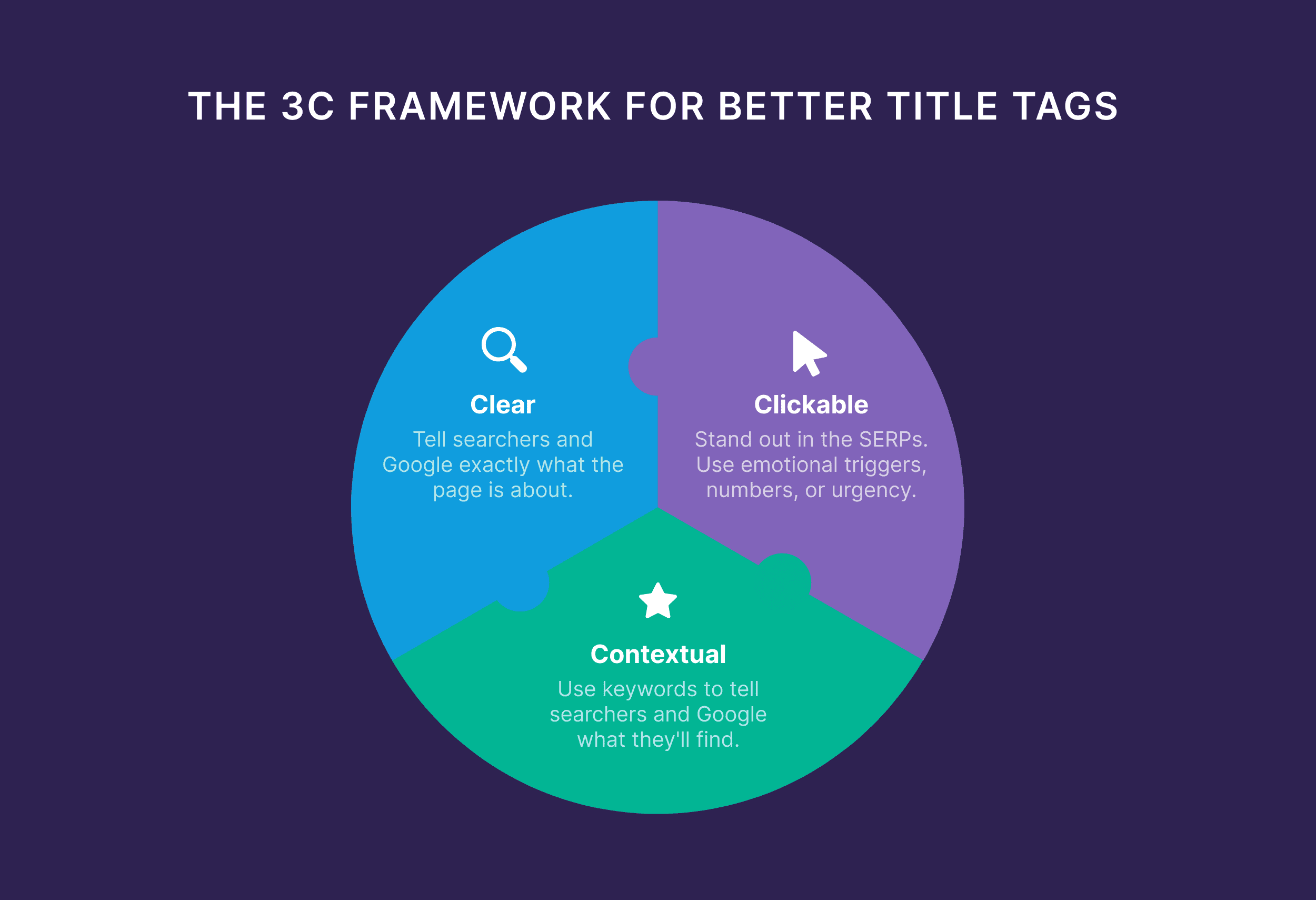
A redesign will provide you with an opportunity to review page titles, headings, descriptions, image alt text, and internal links. For example, a simple home page with a company name will not enhance interest of the user. Redesigning a page with a descriptive title that actually addresses the concerns of the user will be beneficial. It will provide relevance to the page and communicate the information effectively. Google also prioritises websites that consist of descriptive and concise titles without keyword stuffing. The headings should also communicate effectively rather than existing just for SEO.
How conversions are improved by website redesign
SEO brings the target audience and qualified visitors to the website, but a conversion-oriented design encourages and guides them to take the next useful step. A conversion can be based on:
● Submitting an enquiry form
● Calling a business
● Requesting a quotation
● Booking a consultation
● Purchasing a product
● Signing up
● Sending a WhatsApp message
● Downloading a resource
A redesign can make the path clear for the user and avoid unnecessary blockages. A redesign can improve conversions through:
Clearer CTAs used
CTAs help visitors to understand what and how they should do it. For example, a service page might use calls to action like: Request a Quote, Book a Consultation, View Our Work, Contact Us, etc. Using the right CTA depends on users’ decision stage.
It gives a stronger first impression
Your website provides the first impression of your business. If a visitor encounters an outdated layout, inconsistent typography, low-quality imagery, broken elements, or confusing navigation, it will reduce their trust and confidence in further reading your web page. A professional design is not about adding visuals everywhere, but it consists of focusing on branding, messaging, hierarchy, imagery, and functionality working together.
Easier navigation
When a user cannot find the relevant information promptly, they will leave immediately without exploring further. A redesign can help with easier navigation through:
1. Reducing unnecessary menu items
2. Grouping related services
3. Using descriptive labels
4. Improving mobile menus
5. Adding relevant internal links
6. Creating clearer page hierarchy
If you own an e-commerce website, you need to focus more on navigation, as it helps visitors to find, compare, evaluate, and purchase products quickly.
Better forms and enquiry journey
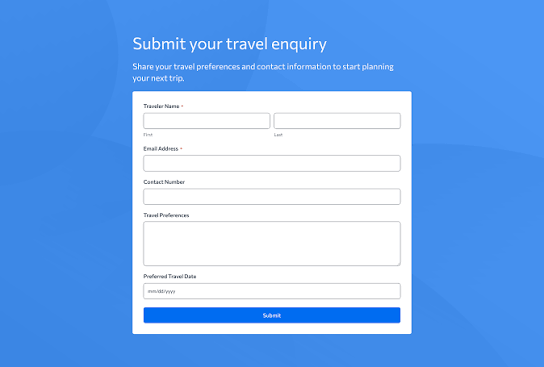
Your business can lose leads if users are unable to enquire easily. For example, filling out a form can cause unnecessary delay. By redesigning, you can add information that is genuinely needed at that stage. In this way, you can simplify the form structure while still making it relevant for users to fill out and can gain enquiries.
Better mobile conversion experience
Mobile visitors expect a clear path to action. Conversion elements such as contact buttons, forms, product information, navigation, and checkout functionality must be easy to access and use. It can be a great way to receive enquiries for businesses that operate through mobile phones and WhatsApp.
Do SEO and conversion improvements work together
Conversion optimisation and SEO must not be treated as separate entities. They should be combined to support each other. For example, a service page ranks well but doesn’t receive conversions. When you consider only SEO, you will get:
1. More keywords
2. More content
3. More backlinks
If you consider only conversions, you will get:
1. Bigger buttons
2. New colours
3. Shorter copy
3. More prominent forms
It is not only necessary that the target audience should find your page, but it is equally important that they should understand your website and know what to do next. If this phenomenon is considered in the redesign, it will lead to success.
When is the right time to redesign your website
A redesign must take place when the current design is showing continuous problems and small updates can’t solve them. The warning signs may include:
● The design looks significantly outdated
● The website is difficult to use on mobile
● Important pages load slowly
● Organic traffic has declined without an obvious explanation
● Visitors cannot easily find important services
● The website receives traffic but generates few enquiries
● Your business has changed, but the website has not
● Your services or products are poorly presented
● The CMS or technology creates ongoing limitations
● Analytics show significant drop-off on important pages
● Your competitors provide a noticeably better online experience
But it is not necessary for a poor-performing website to need a complete redesign. Sometimes working on targeted UX, content, technical SEO, or performance improvement is a better approach. The best way is to audit the complete website and only work on the issues that are actually causing the problem.
How often does a website need maintenance
You can improve SEO through a redesign, but it must be done strategically so that you don’t lose current organic visibility. This becomes important, specifically when changing URLs, removing pages, or restructuring content. Before launching your website, save the important current URLs and analyse which pages will remain, change, combine, or disappear.
If URLs change, implement appropriate redirects from old URLs to their relevant new destinations. Google recommends mapping old URLs to corresponding new URLs, checking canonical tags and robots directives, updating internal links, and submitting the new sitemap through Search Console. A step-by-step guide to redesigning your NYC business website without losing ranking
You must include the following SEO practices in a redesign
● Crawl the existing website
● Identify important pages and organic landing pages
● Record existing URLs
● Review rankings, traffic, and conversions
● Map old URLs to new URLs where changes are necessary
● Preserve valuable content where appropriate
● Implement relevant redirects
● Check canonical tags and indexation directives
● Test internal links
● Check mobile usability and performance
● Generate and submit the updated sitemap
● Monitor Search Console and analytics after launch
When the site moves or URLs change, search visibility is affected, and Google keeps an eye on it. Hence, post-launch monitoring is crucial.
Is redesign important, or is building a new website necessary
If your current website has a useful foundation, then redesign is enough to make small improvements. However, you should consider building a website from scratch when the technology is badly outdated, the structure is hard to maintain, important functions are missing, or years of technical issues are making incremental improvements difficult. Before deciding between a redesign and a completely new build, assess the following:
● Existing organic traffic
● Valuable backlinks
● Current URLs
● Website technology
● Content quality
● Performance
● Mobile experience
● Conversion performance
● Required functionality
● Future business requirements
You shouldn’t rebuild a website just because it looks old; focus on redesigning elements that can hinder long-term business outcomes.
Conclusion
A website redesign is not about creating the site more appealing and modern, but making it easier to find, understand, navigate, convert, and use efficiently. A strong redesign combines all the elements such as UX, SEO, performance, content, and business objectives, so that users find it helpful and relatable. Search visibility should be increased no matter where users are coming from. Consider a redesign if your website is outdated, poorly structured, difficult to use, and not generating enquiries. Invest in a professional redesign rather than just changing the visual appearance.
FAQ's
Can I increase Google ranks from a website redesign?
+Can redesigning compromise SEO?
+How can conversions be increased through a redesign?
+Is a redesign important despite receiving traffic?
+When should SEO be implemented on a website?
+